Why geopolitics disrupts oil supply.
Unlike gold — which rises during geopolitical crises because investors seek safe-haven assets — oil rises during crises because geopolitical events physically interrupt the production and transportation of crude oil. The world consumes approximately 100 million barrels of oil per day, and a significant portion of that supply originates in or transits through politically unstable regions. When conflict threatens those supply chains, the market reprices instantly.
The Strait of Hormuz: the world's oil chokepoint
No single geographic feature matters more to oil prices than the Strait of Hormuz — the narrow waterway between Iran and Oman through which approximately 20 million barrels of oil pass every day. That's 20% of global consumption flowing through a 21-nautical-mile-wide channel in one of the world's most militarised regions. Any Iranian threat to close the Strait — even a credible bluff — adds a multi-dollar risk premium to every barrel of crude. The US Navy's Fifth Fleet is permanently stationed in Bahrain specifically to keep this chokepoint open. When tensions rise between Iran and the US/Israel, oil traders price in the probability of disruption immediately.
Sanctions: the modern supply disruption weapon
Sanctions on oil-producing nations are the most common contemporary supply disruption. Western sanctions on Russia (2022–present) removed millions of barrels per day from European markets, forcing a complete reconfiguration of global oil trade flows — Russian crude redirected to India and China, while Europe sourced from the Middle East and US. Sanctions on Iran have constrained ~1-2 million bpd of production capacity. Venezuela's oil industry collapsed from 2.5 million bpd to under 400,000 bpd under US sanctions and domestic mismanagement. Each sanctioned barrel tightens global supply and supports prices.
Production outages: Libya, Iraq, Nigeria
Internal instability periodically shuts down major production in key OPEC nations. Libya's civil conflict has repeatedly taken 1 million bpd offline when militias blockade ports or attack oil fields — only to return when political settlements are reached. Iraq's northern exports through Turkey have been disrupted by disputes between Baghdad and the Kurdistan Regional Government. Nigerian production suffers from pipeline sabotage and theft in the Niger Delta. These outages are unpredictable in timing but predictable in recurrence — they are a permanent feature of the oil market landscape.
The geopolitical risk premium
Oil prices include a "geopolitical risk premium" — the amount that oil trades above what supply/demand fundamentals alone would justify, purely because of the risk of future disruption. During calm periods, this premium might be $2-5/barrel. During active conflicts, it can reach $10-20/barrel. The premium rises when tensions escalate and fades when conflicts appear contained. Skilled oil traders estimate the risk premium and trade its expansion and contraction around news events.
Historical disruptions.
Six defining geopolitical supply disruptions and how oil prices responded. The pattern: the magnitude of the oil move correlates with how many barrels were actually removed from the market, not just the headline shock value.
Gulf War — 1990
Iraq invaded Kuwait, removing 4 million bpd of combined Iraqi and Kuwaiti production overnight. Oil spiked from $17 to $41/barrel — a 140% increase — as nearly 5% of global supply vanished. The US-led coalition's swift military response restored Kuwaiti production, and oil prices settled back to pre-invasion levels within 6 months. Lesson: decisive military resolution produces temporary spikes. Barrel removal that is reversed quickly creates fading trades.
Libyan Civil War — 2011
The Arab Spring uprising against Gaddafi shut down nearly all of Libya's 1.6 million bpd production. Oil spiked to $125/barrel as high-quality light sweet crude vanished from the Mediterranean market. The IEA coordinated an emergency release of 60 million barrels from strategic reserves — a rare intervention that capped the price spike. Production took years to fully recover, teaching the market that outages in fragile states are not quickly resolved.
Abqaiq Drone Attack — 2019
A drone and missile attack on Saudi Aramco's Abqaiq processing facility and Khurais oil field temporarily knocked out 5.7 million bpd — roughly 5% of global supply — in the largest single supply disruption in history. Oil spiked 15% at the open, the biggest intraday jump on record. Saudi Arabia restored production within weeks, and prices faded. The event demonstrated that even catastrophic-looking disruptions fade if production capacity is restored quickly.
Russia-Ukraine War — 2022
Russia's full-scale invasion of Ukraine was the most consequential oil supply event in decades. Western sanctions, EU import bans, and the G7 price cap on Russian crude removed millions of barrels from Western markets. Oil spiked from $90 to $120+ in March 2022. Unlike the Gulf War, this disruption was structural — global oil trade flows permanently reconfigured. Russian oil now flows to India and China at a discount; Europe permanently diversified to Middle Eastern and US supply.
Venezuela Collapse — 2017–2020
Venezuela's oil industry imploded under a combination of US sanctions, mismanagement, and underinvestment. Production collapsed from 2.5 million bpd in 2015 to under 400,000 bpd — a loss of over 2 million bpd, roughly equivalent to removing Nigeria from the global market. Because the collapse was gradual rather than sudden, it supported oil prices through a slow supply squeeze rather than a sharp spike. The lesson: structural production losses create sustained price floors rather than temporary spikes.
Red Sea / Houthi Attacks — 2023–2024
Houthi rebel attacks on commercial shipping in the Red Sea forced tankers to reroute around the Cape of Good Hope, adding 10-14 days and significant cost to each voyage from the Middle East to Europe. While no supply was actually removed from the market, the disruption to shipping logistics added a $3-5 risk premium to oil. This demonstrated that even logistical disruptions — not just production losses — can support prices when the alternative routing is costly and time-consuming.
Trading oil during supply crises.
Don't chase the initial spike
The first reaction to a supply disruption headline is algorithmic and emotional. Spreads widen to 5-10x normal, and the initial 2-3 minute candle often overshoots by $1-3/barrel before pulling back. Wait for the first meaningful retracement — typically 30-50% of the initial spike — before entering. The pullback entry captures the sustained move with dramatically better risk/reward.
Assess barrels at risk, not headlines
Not all geopolitical headlines are equal. A headline about "rising tensions in the Middle East" without specific supply impact might be a $1 move that fades. The actual shutdown of a 300,000 bpd Libyan oil field is a $3-5 move that holds. Always quantify: how many barrels per day are actually disrupted or at risk? What percentage of global supply? Is there spare capacity elsewhere to compensate? Trade the barrels, not the narrative.
Watch for SPR and IEA responses
When geopolitical disruptions threaten sustained supply shortages, governments can release crude from strategic reserves. The US Strategic Petroleum Reserve holds hundreds of millions of barrels; the IEA can coordinate member-country releases. An SPR release announcement typically causes a $2-5 immediate dip in oil. Track SPR inventory levels — a depleted SPR means less government ability to cap future price spikes.
Distinguish temporary from structural disruption
Temporary disruptions (pipeline sabotage fixed in days, port blockade resolved in weeks) produce spike-and-fade patterns — trade the fade. Structural disruptions (permanent sanctions, production collapse from underinvestment, trade route reconfiguration) produce sustained higher price ranges — trade the new range. The Russia-Ukraine war is structural; a Libyan militia blockade is temporary. Correctly classifying the disruption is the single most important analytical step.
Geopolitical risks for oil in 2026.
The current geopolitical environment has multiple simultaneous supply risk factors — the most complex landscape for oil traders in decades:
Strait of Hormuz: permanent risk premium
Iran-US tensions remain elevated, and the Strait of Hormuz continues to be the most significant chokepoint risk in global energy markets. Any escalation — Iranian nuclear programme developments, US military posturing, or maritime incidents — immediately adds $5-10+ to oil. The US Fifth Fleet presence in Bahrain provides containment, but the risk of miscalculation is ever-present. Oil traders should maintain a baseline awareness that 20 million bpd flow through a conflict zone.
Russia-Ukraine: structural supply reconfiguration
The war continues to reshape global oil flows. Russian crude is permanently redirected to Asian markets at a discount, while Europe has structurally shifted to Middle Eastern and US supply. New sanctions packages periodically tighten the screws on Russian exports. Any escalation that threatens Russian production infrastructure — or any peace deal that could see sanctions lifted and Russian barrels return — would produce massive oil moves in either direction.
Libya & Venezuela: chronic outage risk
Libya's oil production remains hostage to political instability — militia blockades and factional fighting periodically shut down 500,000-1,000,000 bpd with little warning. Venezuela's production has stabilised at a fraction of its former capacity, but any sanctions relief could potentially bring barrels back to market (bearish) while any tightening could remove them further (bullish). Both nations represent wildcard supply that can swing the global balance by 1-2 million bpd.
Middle East: multi-front tensions
The broader Middle East remains the epicentre of oil supply risk. Israel-Iran tensions, Red Sea shipping disruptions, Iraq's internal stability, and Saudi Arabia's vulnerability to regional escalation all contribute to a structural risk premium in oil prices. Unlike the Cold War era — when the US could pressure allies to stabilise production — today's multipolar world means fewer off-ramps for regional tensions. This persistent elevated risk environment supports higher baseline oil prices than historical models would suggest.
Bottom line for oil traders: The geopolitical risk premium in oil is structurally elevated and likely to remain so. Multiple simultaneous flashpoints mean that even if one tension eases, others maintain supply anxiety. For traders, this creates an asymmetric opportunity: de-escalation produces shallow oil dips (buying opportunities), while escalation produces sharp rallies. The bias is structurally bullish from a geopolitical perspective until global security conditions materially improve — and there is no sign of that happening soon.
Trading oil during supply crises.
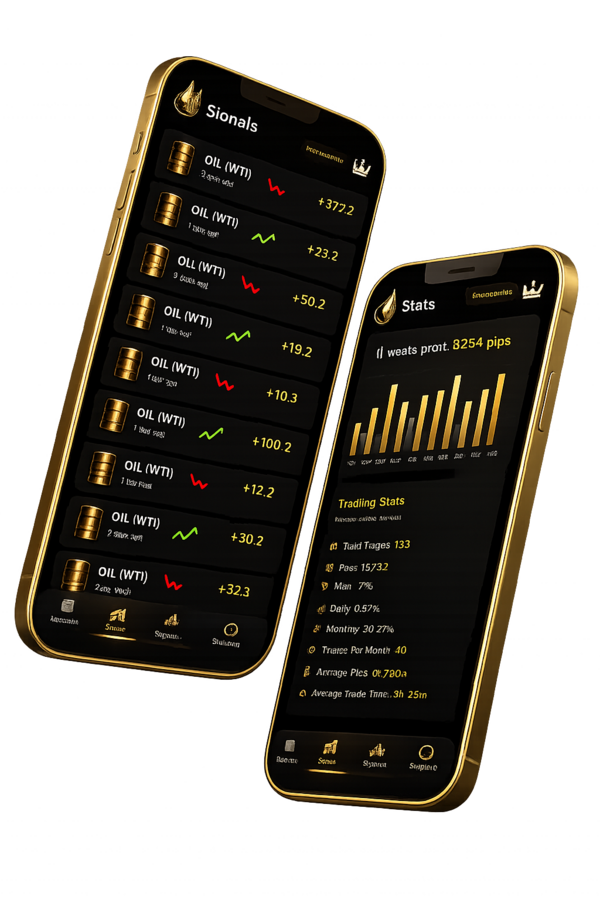
See how OilSniper signals captured gains during geopolitical disruptions.
Geopolitics & oil FAQ
Why does oil spike during geopolitical conflicts? +
Oil production and transportation are concentrated in volatile regions. The Strait of Hormuz carries 20% of global supply. Russia produces 10+ million bpd. Middle Eastern nations account for 30%+ of global output. When conflict threatens these sources, the market prices in the probability of physical barrels being removed from supply — not safe-haven flows like gold, but actual supply disruption risk.
How much does oil rise during a supply crisis? +
It depends on barrels at risk. Minor disruptions (300,000 bpd Libya outage) = $2-5. Major disruptions (Strait of Hormuz threat, 20 million bpd) = $10-20+. The 1990 Gulf War spiked oil 140%. The 2019 Abqaiq attack caused the largest single-day spike in history at +15%. The key variable is disrupted barrels versus available global spare capacity.
Does oil stay elevated after a supply disruption? +
Temporary disruptions (pipeline fixes, port blockades resolved) produce spikes that fade. Structural changes (Russia sanctions reconfiguring global trade, Venezuela production collapse) produce sustained higher ranges. Assess whether barrels are permanently lost or temporarily delayed — this determines whether the price move is a fade opportunity or a new trading range.
How should I trade oil during geopolitical events? +
Never chase the initial spike — wait for the pullback. Quantify barrels actually disrupted versus global spare capacity. Distinguish temporary from structural disruptions. Monitor SPR/IEA responses which can cap spikes. And use wider stops — geopolitical headlines cause erratic reversals as ceasefire rumours and escalation news alternate.
Oil signals for uncertain times.
Professional USOIL alerts that account for geopolitical supply risk. Download free.