Broker comparison

Best brokers for
oil trading.

Side-by-side comparison of the top USOIL brokers — spreads in cents (not pips), margin requirements, ECN vs Standard accounts, leverage, and how they handle oil rollover.

6
Brokers reviewed
0.0¢
Lowest spread
1:500
Max leverage
2026
Updated
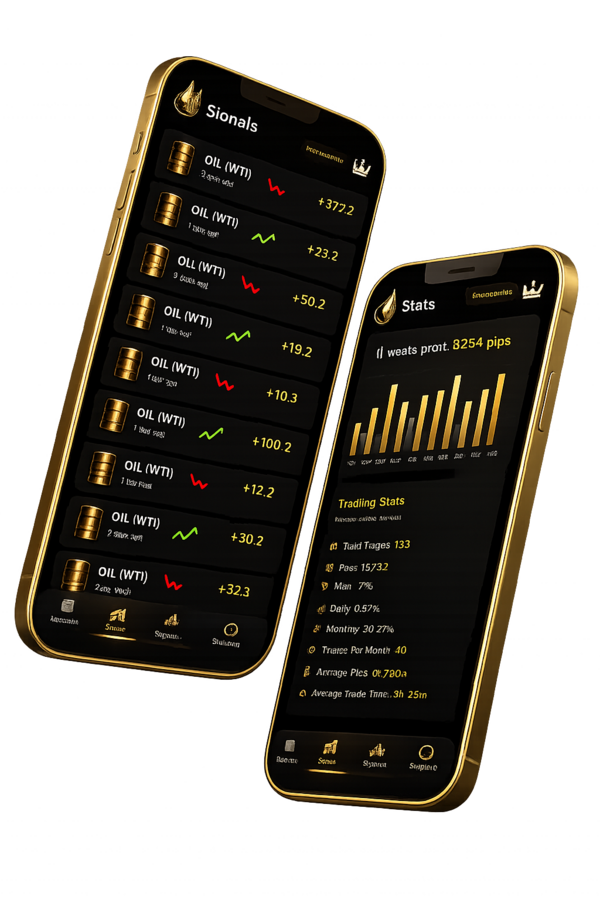
OilTrading app preview
Selection criteria

What to look for in an oil broker.

Not all forex brokers are created equal for oil trading. USOIL's characteristics — high volatility, futures-based pricing, monthly rollover, and cents-based quoting — amplify differences between brokers. Here are the five critical factors to evaluate:

1. Spread in cents and total trading cost

Oil spreads are quoted in cents, not pips. Standard accounts: 3-5 cents ($30-$50 per round turn on 1.0 lot). ECN/Raw accounts: 0.0-1.0 cents plus $3.50-$7 commission per round turn. A 5-cent spread on a standard account costs the same as 0.5-cent spread + $4.50 commission on ECN. Calculate total cost: spread (cents × $10) + commission per round turn. For active traders (5+ trades/day), ECN accounts save significantly.

2. Margin requirements per lot

Oil margin varies dramatically between brokers: $500-$1,000 per 1.0 lot at 1:100 leverage, but as low as $150 at 1:500. For a $1,000 account, you can trade 1-2 standard lots at high leverage (dangerous) or 0.05-0.10 lots safely (recommended). Check your broker's margin during high-volatility periods — some brokers increase margin requirements ahead of EIA reports and OPEC+ meetings.

3. Rollover policy and swap rates

Oil futures expire monthly — not quarterly like some commodities. Your broker will automatically roll your CFD position to the next contract. The rollover date varies by broker (typically around the 20th of the month). In contango, you pay the spread between contracts (negative roll yield). Some brokers offer swap-free oil accounts. Understand your broker's rollover calendar and swap costs before holding positions through expiration.

4. Execution quality during news events

Oil spikes 50-150 cents during EIA releases. During OPEC+ announcements, moves can be $3-$8. Brokers hosted on Equinix data centers (NY4, LD4) provide the fastest execution. Market maker brokers may widen spreads or reject orders during high volatility — ECN/STP brokers generally provide better fills. If you trade the EIA release, execution quality is non-negotiable.

5. Platform and oil-specific tools

Most oil traders use MT4 or MT5. cTrader offers better Level II pricing for scalpers. TradingView integration matters if you prefer its charting. Look for: one-click trading (critical for fast entries during EIA), economic calendar with EIA/API/rig count times, and mobile apps that handle oil's tick size correctly. Some brokers offer oil-specific sentiment indicators and COT data integration.

Top 6 brokers

Best USOIL brokers compared.

IC Markets

Oil spread0.0–1.0 cents (Raw)
Max leverageUp to 1:500
Margin / lot~$150/1.0 lot
RegulationASIC, CySEC, FSA
PlatformsMT4, MT5, cTrader
ECN scalpers & EIA traders

Lowest raw oil spreads in the industry — from 0.0 cents on Raw Spread account. Equinix NY4 servers deliver sub-millisecond execution. $3.50/lot/side commission. Total round-turn cost ~$7 + minimal spread. The go-to broker for active oil day traders.

Pepperstone

Oil spread0.0–1.0 cents (Razor)
Max leverageUp to 1:500
Margin / lot~$150/1.0 lot
RegulationFCA, ASIC, CySEC, DFSA
PlatformsMT4, MT5, cTrader, TradingView
All-round traders

Exceptional execution quality with native TradingView integration. Razor account: 0.0 cent spreads + $3.50/lot commission. Active trader rebates reduce costs for high volume. Strong FCA regulation and excellent customer support. Ideal for traders who want both tight spreads and regulatory safety.

OANDA

Oil spread3 cents average (Standard)
Max leverageUp to 1:100
Margin / lot~$725/1.0 lot
RegulationFCA, ASIC, CFTC/NFA, MAS
PlatformsMT4, MT5, TradingView, fxTrade
US-based & cautious traders

One of few brokers accepting US clients for oil CFDs. CFTC-regulated with decades of track record. No commission, 3-cent average spread. No minimum deposit. Proprietary fxTrade platform is excellent. Wider spreads than ECN brokers but unmatched regulatory safety. Best for US traders who value reliability over cost.

Exness

Oil spread2 cents (Zero) / 0.0 cents (Raw)
Max leverageUp to 1:2000 / Unlimited
Margin / lot~$36/1.0 lot (at 1:2000)
RegulationFCA, CySEC, FSA, FSCA
PlatformsMT4, MT5, Exness Terminal
Small accounts & high leverage

Ultra-low margin requirements let small accounts trade meaningful positions. Zero account: spreads from 0.0 cents + commission. Raw Spread account: from 0.0 cents. Standard account: competitive 2-cent average. Instant withdrawals. Unlimited leverage option. Swap-free oil available on some accounts.

XM

Oil spread3 cents (Ultra Low)
Max leverageUp to 1:1000
Margin / lot~$72/1.0 lot (at 1:1000)
RegulationCySEC, ASIC, DFSA, IFSC
PlatformsMT4, MT5
Beginners & bonus hunters

Very accessible: $5 minimum deposit, 3-cent average spread on Ultra Low account with no commission. Generous welcome bonuses and loyalty programs. Strong educational content including oil-specific webinars. Best starting point for someone taking their first oil trade — low barrier to entry with adequate execution.

FTMO

Oil spreadVariable (liquidity provider)
Max leverageUp to 1:100
Margin / lotDepends on challenge size
RegulationProp firm (not a broker)
PlatformsMT4, MT5, cTrader
Funded prop traders

Proprietary trading firm — funds traders who pass evaluation. Trade up to $200K in capital with 80-90% profit split. Oil is one of the most popular FTMO instruments. Strict risk management (5% daily, 10% max loss) teaches discipline. Evaluation fee ($540 for $100K) refundable upon first profit split. Alternative to depositing your own capital.

Signals for any broker. OilSniper works with IC Markets, Exness, Pepperstone.
Side by side

Quick comparison table.

Broker Oil Spread Commission Leverage Regulation Min Deposit Margin/1.0 lot
IC Markets 0.0–1.0 cents $7/round turn 1:500 ASIC, CySEC, FSA $200 ~$150
Pepperstone 0.0–1.0 cents $7/round turn 1:500 FCA, ASIC, CySEC, DFSA $200 ~$150
OANDA 3 cents avg None 1:100 FCA, CFTC/NFA, ASIC, MAS $0 ~$725
Exness 0.0–2 cents Varies by a/c 1:2000 FCA, CySEC, FSA, FSCA $10 ~$36
XM 3 cents avg None 1:1000 CySEC, ASIC, DFSA, IFSC $5 ~$72
FTMO Variable Included 1:100 Prop firm (not a broker) Eval fee Challenge rules

* Spreads shown are typical for ECN/Raw/Zero accounts during US session (9:30 AM - 11:30 AM ET). Margin estimates based on maximum available leverage. Actual conditions vary by market volatility and account type.

In-depth reviews

Detailed broker breakdown.

IC Markets — Best for ECN oil traders

IC Markets is the industry leader for raw spread oil trading. Their Raw Spread account offers USOIL from 0.0 cents during peak liquidity, with a $3.50/lot/side commission ($7 round turn). With Equinix NY4 servers, average execution is under 40ms — critical during EIA releases when oil can spike 50+ cents in seconds. For active oil day traders taking 5-10 trades daily, the ECN cost structure saves hundreds per month compared to standard accounts.

ASIC (Australia), CySEC (Cyprus), and FSA (Seychelles) regulation. Australian/European clients get segregated funds and negative balance protection. Supports MT4, MT5, and cTrader — cTrader being preferred by oil scalpers for Level II depth-of-market pricing. Their oil rollover is well-communicated with email notifications before contract expiry. $200 minimum deposit. Main drawback: no US clients accepted, limited educational content.

Pepperstone — Best all-round broker for oil

Pepperstone matches IC Markets on spread and execution while adding stronger regulation and platform diversity. Their Razor account: USOIL from 0.0 cents + $3.50/lot/side commission. Native TradingView integration is a standout — you can trade oil directly from TradingView charts with Pepperstone as your broker, combining the best charting platform with institutional-grade execution.

Regulation from FCA (UK), ASIC (Australia), CySEC (Cyprus), and DFSA (Dubai) provides multi-jurisdictional protection. Active trader program offers volume rebates reducing effective commission up to 25%. Customer support is consistently rated best-in-class — useful when you need help during a volatile oil session. Also supports cTrader, MT4, MT5, and social trading via DupliTrade. For most oil traders, Pepperstone represents the best balance of cost, execution, and regulatory safety.

OANDA — Best for US traders and reliability

OANDA is one of very few reputable brokers accepting US clients for oil CFDs, and the most trusted option for Americans. Regulated by CFTC/NFA (US), FCA (UK), ASIC (Australia), and MAS (Singapore). Their USOIL spread averages 3 cents with zero commission — wider than ECN brokers but transparent with no hidden costs. No minimum deposit and fractional position sizing let you start small.

The proprietary fxTrade platform is genuinely good for oil: clean design, reliable execution, and real-time order book data. They also support MT4, MT5, and TradingView. OANDA's historical price data API is popular among algorithmic oil traders. The tradeoff: wider spreads and lower leverage (1:100 max, 1:50 for US clients under CFTC rules). For US-based traders who value regulatory safety and reliability over the absolute lowest cost, OANDA is the clear choice.

Exness — Best for small accounts & high leverage

Exness has carved a niche as the go-to broker for traders with limited capital. With $10 minimum deposit, leverage up to 1:2000 (unlimited for sub-$1,000 accounts on some entities), and margin as low as ~$36 per standard lot, even a $100 account can trade oil meaningfully. Their Zero account offers spreads from 0.0 cents + commission; Standard accounts average 2 cents with no commission — already competitive with many ECN offerings.

A key differentiator: instant withdrawals — Exness processes most requests in seconds. Swap-free oil accounts are available, valuable for position traders avoiding overnight costs. Regulated by FCA, CySEC, FSA, and FSCA. The concern: ultra-high leverage can destroy accounts rapidly in oil's volatile environment. Exness is powerful in the right hands but requires strict self-discipline — never use their maximum available leverage unless you fully understand the risk.

XM — Best for first-time oil traders

XM excels at removing barriers for new traders. $5 minimum deposit, 3-cent average spread with no commission on Ultra Low accounts, and generous welcome bonuses (up to 100% match on deposits) effectively double your starting capital. The platform experience is polished and beginner-friendly — important when someone is learning both a new platform and a new instrument simultaneously.

XM's educational content is the best in this comparison: daily webinars covering oil-specific topics, structured trading academy, and 30+ language customer support. For a trader taking their first USOIL position, XM provides the most supportive environment. The tradeoffs: slightly wider spreads than pure ECN brokers, execution that can lag during extreme volatility, and limited platform options (MT4/MT5 only). Most traders outgrow XM within 6-12 months — but as a starting point, it's unbeatable.

FTMO — Best for funded prop trading

FTMO is not a broker — it's a proprietary trading firm that funds traders who pass a rigorous evaluation. The process: pass the FTMO Challenge (8% profit target in 30 days, max 5% daily loss, 10% max loss) → pass Verification (5% target, same risk rules) → receive funded account up to $200,000 with 80-90% profit split. Oil is consistently among the most traded FTMO instruments because its volatility makes hitting targets feasible within time limits.

The evaluation's risk management rules (max 5% daily drawdown, 10% max loss) teach excellent discipline — these are real-world standards that professional oil traders follow. If you can pass FTMO trading oil, you have genuine edge. Cost: $540 for $100K challenge (refundable on first profit split). FTMO provides MT4/MT5/cTrader with competitive execution. Key risk: failing the challenge loses the evaluation fee — a $540 cost for a learning experience that teaches more than any course.

Pick your broker. Download OilSniper. Signals arrive in under 1s.
Broker agnostic

OilSniper works with any broker.

OilSniper is not affiliated with any broker. We provide precise trade signals — exact entry price, stop-loss, and take-profit levels in USOIL — that you execute on whichever platform and broker you already use. There's no required integration, no API connection, and no broker-specific setup.

When a signal fires, you receive a notification with something like:

New Signal
BUY USOIL
Entry: 72.50
Stop Loss: 71.80 (-70 cents)
Take Profit 1: 73.50 (+100 cents)
Take Profit 2: 74.50 (+200 cents)
R:R = 1:1.43 (TP1) / 1:2.86 (TP2)

You then open your broker's platform, navigate to USOIL, and place the order with the specified levels. The entire process takes 15–30 seconds. Whether you're on IC Markets with sub-cent spreads or OANDA with 3-cent spreads, the signal levels account for normal market conditions. OilSniper stop-losses and take-profits are set at meaningful technical levels (psychological round numbers, structural highs/lows) — not arbitrary cent distances.

This broker-agnostic approach means you're always free to switch brokers, use multiple accounts simultaneously, or trade on prop firm accounts like FTMO — all while following the same signals. No lock-in, no broker kickbacks, no conflicts of interest.

App demo

See signals executed on brokers.

Watch how OilSniper alerts work with IC Markets, Exness, and Pepperstone on USOIL.

Download the App →
FAQ

Frequently asked questions.

Which broker has the lowest USOIL spread?

IC Markets and Exness consistently offer the tightest raw spreads from 0.0 cents on their Raw/Zero accounts (plus ~$7/round-turn commission). Pepperstone's Razor account is virtually identical. For no-commission standard accounts, Exness offers the tightest at ~2 cents average. Remember to compare total cost: a 0.0-cent spread with $7 commission costs roughly the same as a 3-4 cent spread with no commission on standard accounts. Active traders (5+ trades/day) should use ECN/Raw accounts.

Do I need a special account type for oil trading?

No — any standard forex/CFD account with commodities can trade USOIL. However, ECN/Raw/Zero accounts give tighter spreads (0.0-1.0 cents + commission) for lower total trading costs if you trade actively. Standard accounts (3-5 cent spreads, no commission) work fine for swing traders taking 1-3 trades per week. Check your broker's oil rollover dates and swap rates before holding positions across contract expiry.

What leverage should I use for oil?

Much less than the maximum. While brokers offer up to 1:2000, oil's 100-300 cent daily ranges make high leverage catastrophic. Use effective leverage of 1:10 to 1:30 regardless of what's available — this means if you have $1,000, don't trade more than 0.10-0.30 lots ($10,000-$30,000 notional). EU regulators cap oil at 1:20 by law for a reason. Beginners should stay at 1:20; experienced traders can use 1:50-1:100 with strict risk management.

Can I use OilSniper with any broker?

Yes. OilSniper provides price levels (entry, SL, TP in USOIL) that you manually execute on your broker. We're completely broker-agnostic — no integration required. Works on MT4, MT5, cTrader, TradingView, or any proprietary platform. You can also use signals on prop firm accounts (FTMO, etc.). The only requirement: your broker must offer USOIL with reasonable execution. All six brokers reviewed above work perfectly.

Trade oil with confidence.

Professional signals that work with any broker. Free to download, no card required.